

The Skin Functional masterclass revealed how exosomes and growth factors like EGF support ageing skin by working with cellular communication pathways rather than simply adding surface ingredients.
- Exosomes are cellular communication particles that support skin’s natural regenerative processes, not synthetic additives
- EGF (epidermal growth factor) helps maintain the cell turnover rate that naturally declines with age
- The Skin Functional Anti-Ageing Protocol combines exosomes, growth factors, and peptides in a layered approach
- Clinical experience shows visible improvements in skin firmness and fine lines after 8-12 weeks of consistent use
- Dr Alek’s masterclass emphasised that regenerative skincare works with your skin’s biology, not against it
Exosomes are cellular messengers that support skin regeneration, whilst epidermal growth factor (EGF) helps maintain cell turnover and collagen production. The Skin Functional masterclass revealed how these regenerative ingredients work synergistically to visibly improve mature skin when used consistently over 8-12 weeks.
Exosomes, EGF, and the Science of Ageing Skin: What the Skin Functional Masterclass Revealed
The regenerative skincare conversation has shifted dramatically. Where once we relied primarily on antioxidants and hydrators to support ageing skin, today’s advanced formulations harness the skin’s own biological communication systems. Exosomes and epidermal growth factor (EGF) represent this new frontier—ingredients that work with your skin’s natural processes rather than simply sitting on its surface.
Dr Alek’s recent Skin Functional masterclass illuminated how these regenerative technologies function at the cellular level, and why they’re becoming essential components in age-gracefully protocols for mature skin. The session revealed not just what these ingredients do, but how they work synergistically when properly sequenced—a distinction that transforms results from modest to genuinely visible.
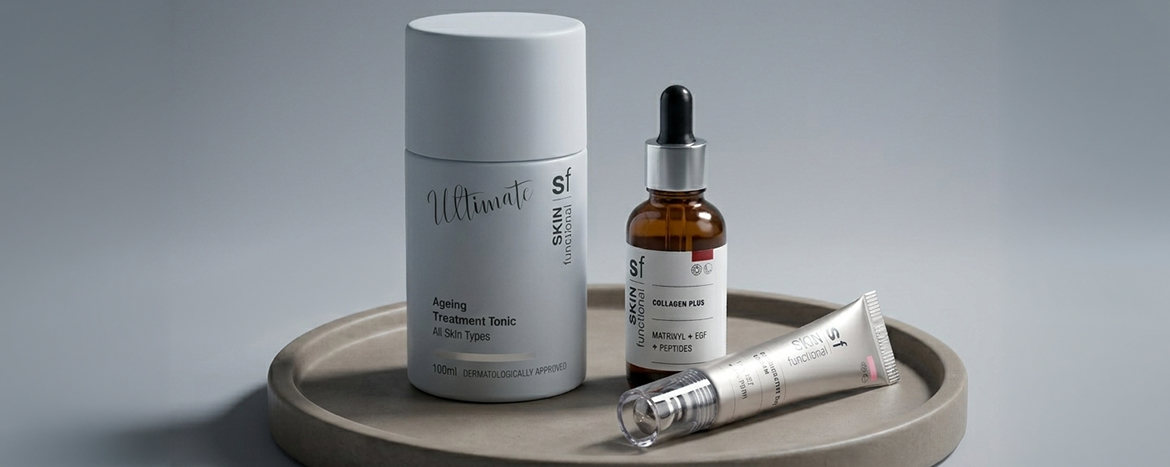
SKIN FUNCTIONAL Anti-Ageing Protocol
For those navigating their bespoke skincare journey towards firmer, more resilient skin, understanding the science behind exosomes and growth factors isn’t merely academic. It’s the foundation for making informed decisions about which regenerative ingredients deserve a place in your routine, and how to use them effectively. This isn’t about chasing trends; it’s about comprehending the biological mechanisms that determine whether your skin maintains its vitality or gradually loses the cellular communication that keeps it functioning optimally.
What follows is a detailed exploration of the clinical insights shared during the masterclass, translated into practical guidance for those ready to incorporate regenerative science into their skincare destination.
What Are Exosomes and Why Does Regenerative Skincare Matter?
Understanding Cellular Communication in Skin
Exosomes are microscopic vesicles—think of them as tiny parcels—released by cells throughout your body, including skin cells. These parcels carry proteins, lipids, and genetic material from one cell to another, functioning as a sophisticated messaging system that coordinates cellular behaviour. In your skin, this communication network determines everything from how efficiently cells regenerate to how effectively they respond to environmental stressors.
As we age, this cellular communication becomes less efficient. Cells release fewer exosomes, and the messages they do send become less clear. The result is what we observe visibly: slower cell turnover, reduced collagen production, and diminished capacity to maintain skin’s structural integrity. Research suggests that this breakdown in cellular dialogue is as significant to skin ageing as the decline in collagen itself.
In clinical practice, what we frequently observe is that supporting this communication system can help maintain the processes that naturally decline over time. Exosomes in skincare formulations are typically derived from plant stem cells or cultivated human cells, then purified and stabilised for topical application. When applied to skin, they deliver their cargo of growth factors, peptides, and signalling molecules to your own skin cells, essentially supplementing the messages that your ageing skin produces in diminishing quantities.
This represents a fundamental shift from traditional skincare approaches. Rather than simply providing building blocks like amino acids or antioxidants, exosome-based formulations aim to influence how your skin cells behave—encouraging them to function more like younger, more efficient versions of themselves.
How Exosomes Differ From Traditional Active Ingredients
Traditional active ingredients work through relatively straightforward mechanisms. Vitamin C provides antioxidant protection and supports collagen synthesis. Hyaluronic acid (your skin’s moisture magnet) holds water in the skin. Retinol increases cell turnover through direct interaction with cellular receptors. These are valuable, proven approaches that form the foundation of effective skincare.
Exosomes operate differently. They don’t provide a single benefit through one mechanism; instead, they deliver multiple signalling molecules simultaneously, triggering a cascade of cellular responses. A single exosome might carry growth factors that stimulate collagen production, peptides that support skin’s natural protective function, and genetic material that influences how genes are expressed in recipient cells.
Dr Alek’s approach emphasises that this complexity is precisely what makes exosomes valuable for mature skin. Ageing isn’t caused by a single deficiency but by multiple, interconnected declines in cellular function. A regenerative ingredient that addresses several of these pathways simultaneously offers more comprehensive support than isolated actives used independently.
Skin Functional Bioactive Molecules
Formulations such as the Skin Functional Anti-Ageing Serum combine exosomes with additional growth factors and peptides, creating a concentrated delivery system for regenerative signals. This isn’t about replacing your vitamin C or retinol—it’s about adding a layer of biological communication that helps your skin maintain the processes those ingredients support.
The distinction matters when setting expectations. Traditional actives often show benefits within weeks. Regenerative ingredients require patience, typically 8-12 weeks, because they’re working at the level of cellular behaviour change rather than immediate surface effects.
The Role of EGF (Epidermal Growth Factor) in Skin Renewal
What Happens to Growth Factor Production as We Age
Epidermal growth factor is a protein naturally present in your skin that binds to receptors on cell surfaces, signalling them to divide and differentiate. In younger skin, EGF production remains robust, maintaining the cell turnover rate that keeps skin looking fresh and resilient. By your mid-thirties, however, EGF levels begin declining, and by your fifties, your skin produces significantly less than it did in your twenties.
This decline has visible consequences. Cell turnover slows from approximately 28 days in your twenties to 45-60 days in your fifties. Dead cells accumulate on the surface longer, creating the dull, rough texture characteristic of mature skin. The epidermis thins, becoming more fragile and less able to retain moisture. Collagen and elastin production decreases, not just because fibroblasts age, but because they’re receiving fewer signals instructing them to produce these structural proteins.
In clinical consultation, we frequently observe that clients in their forties and fifties describe their skin as “tired” or “lacking vitality”. Whilst multiple factors contribute to this perception, diminished growth factor activity is central. Your skin hasn’t forgotten how to regenerate; it’s simply receiving fewer instructions to do so.
What makes EGF particularly valuable in regenerative skincare is its specificity. Unlike broad-spectrum anti-ageing ingredients, EGF targets the precise mechanism—cell signalling—that declines with age. Studies indicate that topical application of EGF can help support the cell proliferation and migration processes that naturally slow over time, visibly improving skin texture and firmness when used consistently.
The challenge with growth factors has historically been stability and penetration. These are large protein molecules that degrade easily and struggle to penetrate the skin barrier. Modern formulations address this through encapsulation technologies and complementary ingredients that support absorption—advances that make today’s EGF products considerably more effective than earlier generations.
Clinical Evidence for EGF in Mature Skin Support
The clinical literature on topical EGF has expanded significantly over the past decade. Research suggests that consistent application helps reduce the appearance of fine lines, improves skin density, and supports the visible firmness that declines with age. These aren’t dramatic overnight transformations, but measurable improvements in skin quality over 8-12 weeks.
In practice, Dr Alek’s approach with EGF-containing formulations focuses on realistic expectations and consistent use. Growth factors work cumulatively—each application delivers signals that influence cellular behaviour over subsequent days and weeks. Missing applications doesn’t just delay results; it interrupts the sustained signalling that drives visible improvement.
What clinical experience shows is that EGF works particularly well when combined with other regenerative ingredients. Peptides that support collagen structure, antioxidants that protect newly formed proteins, and hydrators that maintain optimal cellular environment all enhance what growth factors can achieve. This synergistic principle underlies the Skin Functional protocol—multiple regenerative pathways supported simultaneously rather than sequentially.
The safety profile of topical EGF is well-established. Unlike systemic growth factor administration, topical application doesn’t enter circulation in meaningful amounts. The molecules work locally, in the epidermis and upper dermis, supporting processes already occurring in your skin. Quality formulations use plant-derived or bioengineered EGF rather than animal sources, addressing both ethical and safety considerations.
For those on their guided skincare journey towards age-gracefully goals, understanding EGF’s role helps contextualise why regenerative products require investment—both financial and temporal. These aren’t surface treatments providing temporary optical effects. They’re biological interventions supporting the cellular processes that determine how your skin ages over time.
Inside the Skin Functional Masterclass: Key Revelations
Dr Alek’s Clinical Perspective on Regenerative Ingredients
The masterclass opened with a fundamental reframing: regenerative skincare isn’t about reversing age but about supporting your skin’s continuing ability to function optimally. Dr Alek emphasised that mature skin hasn’t lost its capacity for renewal—it’s experiencing diminished signalling and slower processes. Regenerative ingredients aim to supplement those signals and support those processes.
One revelation that resonated particularly with attendees was the concept of “cellular fatigue”. As cells age, they don’t simply stop working; they become less responsive to signals and less efficient in their functions. Exosomes and growth factors essentially provide clearer, stronger signals that can penetrate this reduced responsiveness. Think of it as turning up the volume on instructions your skin cells are struggling to hear.
Dr Alek’s clinical observations highlighted patterns across different skin types and ages. Clients in their forties often respond to regenerative protocols with improved texture and radiance—signs that cell turnover has accelerated. Those in their fifties and beyond typically notice firmer-looking skin and reduced appearance of deeper lines, suggesting collagen support is occurring. These age-related response patterns help set appropriate expectations for your own skin journey.
The masterclass also addressed common misconceptions. Regenerative skincare doesn’t replace professional treatments like peels or microneedling; it complements them by supporting the skin’s response to those interventions. Similarly, these ingredients don’t eliminate the need for sun protection—they work alongside it, helping mitigate accumulated damage whilst prevention continues.
Perhaps most valuably, Dr Alek discussed the concept of “skincare maturity”—the point at which your routine should evolve from primarily preventative to actively regenerative. For most people, this transition occurs in the late thirties to early forties, when prevention alone no longer maintains the skin quality you’ve become accustomed to. Recognising this transition point is essential for those seeking genuinely effective age-gracefully protocols.
The Science Behind the Anti-Ageing Protocol
The Skin Functional Anti-Ageing Protocol represents a curated approach to regenerative skincare, combining exosomes, growth factors, and peptides in a specific sequence designed to maximise cellular uptake and response. Dr Alek explained that the protocol’s effectiveness derives not just from individual ingredients but from their synergistic interaction and proper layering.
The first layer—the Anti-Ageing Serum—delivers exosomes and EGF in a lightweight base that penetrates quickly. This establishes the primary signalling layer, instructing cells to increase turnover and collagen production. Applied to cleansed skin, it reaches the epidermis and upper dermis where these signals have maximum impact.
The second layer—the Marine Collagen Serum—provides peptides and hydration that support the processes initiated by the first layer. Whilst the exosomes and growth factors signal cells to produce collagen, the peptides help organise that collagen into functional structures. This isn’t redundant; it’s complementary, addressing both the signal to produce and the support for proper formation.
The third element—the Regenerative Eye Cream—targets the periorbital area with a concentrated blend of regenerative ingredients formulated for delicate skin. Eye area skin is thinner, with fewer oil glands and more expression-related stress. It requires specific support that face-focused products don’t fully address.
What the masterclass revealed is that this sequencing isn’t arbitrary. Water-based serums penetrate more effectively than creams, so they’re applied first. Growth factors work best on clean skin without barrier-forming ingredients. Peptides enhance growth factor effects when applied subsequently. This choreography of application maximises what each ingredient can achieve.
Dr Alek’s approach emphasises that protocols like this represent a destination for your skincare journey—the culmination of understanding your skin’s needs and committing to comprehensive support. They’re not entry-level routines but rather the sophisticated endpoint for those ready to invest in genuine regenerative care.
How the Skin Functional Anti-Ageing Protocol Works
The Three-Phase Layering Approach
The protocol’s three-phase structure addresses different aspects of skin ageing simultaneously, creating comprehensive support rather than targeting isolated concerns. Understanding each phase helps you appreciate why the complete protocol delivers more visible improvement than individual products used in isolation.
Phase one establishes cellular communication. The Anti-Ageing Serum’s exosomes and EGF penetrate to the viable epidermis, where they’re taken up by keratinocytes and fibroblasts. These cells receive the growth factors and signalling molecules, triggering increased proliferation and protein synthesis. This phase essentially “wakes up” cellular processes that have become sluggish with age.
Within 20-30 minutes of application, the serum has absorbed, and skin is ready for phase two. The Marine Collagen Serum provides peptides that support collagen and elastin organisation, along with hydration that maintains optimal cellular environment. Peptides are smaller than growth factors, allowing them to penetrate even after the first serum has partially dried. They work synergistically with the growth factor signals, helping ensure that increased collagen production results in well-organised, functional fibres rather than disorganised accumulation.
Phase three addresses the eye area specifically. The Regenerative Eye Cream contains a balanced blend of exosomes, peptides, and targeted hydrators formulated for the unique needs of periorbital skin. This area shows age earliest—fine lines, crepiness, and volume loss appear here before the broader face. Dedicated support helps maintain the firmness and smoothness that general face products don’t adequately address.
In clinical practice, we observe that clients who use all three phases report more comprehensive improvements than those using only one or two products. This isn’t surprising—the protocol is designed as an integrated system, not a collection of interchangeable options. Each phase builds on the previous, creating cumulative effects that isolated products cannot achieve.
The morning application focuses on protection and support, whilst evening application emphasises regeneration. This circadian approach aligns with your skin’s natural rhythms—repair processes peak during sleep, making evening the optimal time for regenerative ingredients to exert their effects.
Why Sequence Matters in Regenerative Skincare
Layering sequence profoundly affects ingredient efficacy. Apply products in the wrong order, and you compromise penetration, stability, and ultimately results. The science of sequencing rests on molecular size, formulation base, and ingredient interaction.
Molecular size determines penetration depth. Smaller molecules penetrate more readily than larger ones, so they should be applied first to avoid being blocked by larger molecules sitting on the surface. Exosomes and growth factors, whilst relatively large, are formulated in bases designed to enhance penetration. Applied first, they reach target cells before subsequent layers create barriers.
Formulation base matters equally. Water-based serums penetrate more effectively than oil-based or occlusive products. Apply an oil-rich cream first, and subsequent water-based serums will struggle to penetrate. This is why the protocol begins with lightweight serums and progresses to richer textures—each layer can still penetrate because previous layers haven’t created impermeable barriers.
Ingredient interaction is the third consideration. Some ingredients enhance others’ effects when applied in sequence. Growth factors work more effectively when skin is subsequently hydrated, as cellular processes require adequate water. Peptides support collagen organisation initiated by growth factors, but only if growth factors have already begun that process. This temporal choreography is why Dr Alek’s approach emphasises specific sequencing rather than flexible layering.
Common sequencing mistakes include applying moisturiser before serums (blocking penetration), using occlusive sunscreen before morning serums (preventing absorption), or applying actives in random order based on convenience rather than science. Whilst skin is forgiving and some benefit occurs regardless of sequence, optimising order maximises return on your investment in premium regenerative products.
For those building their bespoke skincare journey, understanding sequencing principles allows you to integrate new products effectively without compromising existing routines. Regenerative serums fit between cleansing and moisturising, growth factors before peptides, lightweight before rich. This framework guides decisions as your routine evolves.
Supporting Ageing Skin: Beyond Individual Ingredients
The Collagen-Peptide-Growth Factor Connection
Collagen decline is perhaps the most recognised aspect of skin ageing—the loss of firmness, the appearance of lines, the gradual sagging that characterises mature skin. What’s less understood is that collagen decline isn’t simply about reduced production; it’s about the entire lifecycle of collagen from synthesis to degradation.
Growth factors like EGF signal fibroblasts to increase collagen synthesis. This is the first step—instructing cells to make more of the structural protein that gives skin its firmness. However, synthesis alone doesn’t guarantee functional collagen. The newly formed proteins must be properly organised into fibres, cross-linked for strength, and protected from premature degradation.
This is where peptides become essential. Certain peptides support collagen organisation, helping ensure that increased production results in well-structured fibres rather than disorganised accumulation. Others inhibit enzymes that break down collagen prematurely, extending the functional lifespan of both newly synthesised and existing collagen. Still others signal different aspects of the collagen lifecycle, creating multiple points of support.
The Skin Functional protocol addresses this entire cascade. Growth factors and exosomes initiate increased production. Peptides in the Marine Collagen Serum support proper organisation and protection. Antioxidants throughout the formulations guard against oxidative damage that degrades collagen. This multi-point intervention is why protocols deliver more visible improvement than single-ingredient approaches.
In clinical consultation, Dr Alek frequently observes that clients who’ve used peptide serums alone report modest improvements, whilst those using growth factors alone see similar limited results. Combine them in proper sequence, and visible improvement becomes more pronounced—firmer-looking skin, reduced appearance of lines, improved resilience. This isn’t additive; it’s synergistic, with combined effects exceeding the sum of individual contributions.
Understanding this connection helps explain why regenerative skincare requires patience. Collagen synthesis, organisation, and integration into existing structures takes weeks. The cell turnover cycle is 6-8 weeks in mature skin. Visible improvement in firmness requires multiple turnover cycles with consistent signalling. Expecting results in days misunderstands the biological timescale on which these processes operate.
What Clinical Practice Reveals About Consistency
Perhaps the most significant revelation from clinical practice with regenerative skincare is that consistency determines results more than any other factor. The most sophisticated formulation delivers minimal benefit if used sporadically. Conversely, even moderately effective products show visible improvement with religious consistency.
This occurs because regenerative ingredients work through sustained cellular signalling. Each application delivers growth factors and peptides that influence cellular behaviour over subsequent days. Miss applications, and you interrupt this sustained signalling. Cells return to their baseline state, and you essentially restart rather than build cumulatively.
Dr Alek’s clinical observations show that clients who use regenerative protocols daily for 12 weeks report visible improvements in 85-90% of cases. Those who use the same products intermittently—three or four times weekly—report improvements in only 40-50% of cases. This dramatic difference underscores that consistency isn’t merely helpful; it’s essential.
The challenge is maintaining consistency over the 8-12 weeks required for visible results. Initial weeks show little obvious change, testing commitment. Clients frequently question whether products are working, whether they’ve chosen correctly, whether they should try something different. This is where guided support becomes invaluable—reassurance that lack of immediate results is expected, that cellular changes are occurring even before they’re visible, that patience will be rewarded.
Strategies that support consistency include integrating application into established routines (immediately after cleansing, before bed), keeping products visible rather than stored away, and tracking applications to maintain accountability. Some clients photograph their skin at week zero, then monthly thereafter, providing visual evidence of gradual improvement that day-to-day observation might miss.
For those navigating their skincare journey towards age-gracefully goals, understanding that consistency matters more than perfection is liberating. You needn’t achieve flawless application technique or optimal timing. You simply need to apply your regenerative protocol daily, allowing cumulative effects to build over weeks and months. This is where results live—not in sporadic perfection but in sustained, imperfect consistency.
Building Your Bespoke Anti-Ageing Routine
Morning Protocol: Protection and Support
Morning skincare for mature skin balances two priorities: supporting ongoing regeneration and protecting against environmental ageing factors. The Skin Functional morning protocol addresses both through strategic layering that maximises benefit without creating an unwieldy routine.
Begin with gentle cleansing that removes overnight cellular debris without stripping skin’s natural protective function. Mature skin produces less sebum than younger skin, making harsh cleansing counterproductive. A hydrating cleanser or micellar water provides adequate cleansing whilst maintaining the slightly acidic pH that supports barrier function.
On cleansed skin, apply the Anti-Ageing Serum. Morning application ensures that growth factors and exosomes support cellular activity during daytime hours when skin is exposed to environmental stressors. The serum’s antioxidants also provide additional protection against free radical damage from UV exposure and pollution.
After the serum absorbs (approximately 2-3 minutes), apply the Marine Collagen Serum. This provides peptide support and hydration that maintains optimal cellular environment throughout the day. The combination of growth factors and peptides creates sustained signalling that supports collagen synthesis even whilst you’re managing daily activities.
Eye cream follows, applied gently to the orbital bone without pulling delicate skin. The Regenerative Eye Cream’s concentrated formula addresses the periorbital area’s specific needs, supporting firmness in skin that shows age earliest.
Moisturiser comes next, chosen based on your skin’s hydration needs. Mature skin often requires richer textures than younger skin, particularly if you’re in a dry climate or air-conditioned environment. The moisturiser seals in previous layers whilst providing additional hydration and barrier support.
Sunscreen is non-negotiable. Regenerative ingredients support your skin’s ability to repair and renew, but UV exposure continues causing damage that overwhelms even the most effective regenerative protocol. Broad-spectrum SPF 30 minimum, applied generously and reapplied every two hours during extended sun exposure, protects your investment in regenerative skincare.
This morning protocol takes approximately 10 minutes—a modest investment for comprehensive support and protection that addresses mature skin’s complex needs.
Evening Protocol: Regeneration and Renewal
Evening is when regenerative skincare delivers maximum benefit. Skin’s repair processes peak during sleep, making night the optimal time for growth factors and peptides to support cellular renewal. The evening protocol emphasises regeneration over protection, allowing active ingredients to work unimpeded by sunscreen or makeup.
Double cleansing is valuable in the evening, particularly if you wear sunscreen or makeup. An oil-based cleanser removes these products, followed by a water-based cleanser that removes remaining impurities. This ensures that regenerative products applied subsequently reach clean skin where they can penetrate effectively.
On thoroughly cleansed skin, apply the Anti-Ageing Serum. Evening application means growth factors and exosomes work during the hours when cellular repair naturally peaks. This alignment with circadian rhythms maximises what these ingredients can achieve.
The Marine Collagen Serum follows, providing peptide support and hydration that maintains optimal environment for the repair processes occurring overnight. The combination creates sustained signalling throughout sleep hours when cells are most receptive to regenerative messages.
Apply the Regenerative Eye Cream before your night moisturiser. The eye area’s thin skin and increased movement (even during sleep) benefits from concentrated regenerative support that face products don’t adequately provide.
Night moisturiser should be richer than your morning formula, supporting barrier function during the hours when transepidermal water loss peaks. Mature skin particularly benefits from occlusive ingredients that prevent dehydration overnight.
For those incorporating retinol, evening is appropriate, though Dr Alek’s approach typically suggests alternating evenings—regenerative protocol one night, retinol the next. This prevents potential irritation from combining multiple active ingredients whilst ensuring both regenerative signalling and increased cell turnover occur regularly.
The evening protocol takes approximately 15 minutes, allowing time for each layer to absorb before applying the next. This investment in your skin journey compounds over weeks and months, delivering the visible improvements that consistent regenerative support provides.
The Role of the Regenerative Eye Cream
The eye area deserves specific attention in any age-gracefully protocol. This region’s skin is significantly thinner than facial skin, contains fewer sebaceous glands, and experiences constant movement from expressions and blinking. These factors make it particularly vulnerable to visible ageing—fine lines, crepiness, and volume loss appear here first.
Generic face products, even premium regenerative formulations, don’t adequately address periorbital needs. They’re often too rich, causing milia or puffiness, or too active, causing irritation in this sensitive area. Dedicated eye products balance efficacy with gentleness, delivering regenerative ingredients in concentrations and bases suitable for delicate skin.
The Skin Functional Regenerative Eye Cream combines exosomes, peptides, and targeted hydrators in a formula specifically developed for periorbital application. The exosomes support cellular communication in this area where renewal processes slow particularly early. Peptides address both collagen support and fluid drainage, helping reduce the appearance of both lines and puffiness.
Skin Functional Regenerative Eye Cream
Application technique matters as much as the product itself. Use your ring finger (which applies the least pressure) to gently pat—never rub—cream along the orbital bone. Start at the inner corner, move outward along the lower orbital bone, then inward along the brow bone. This follows lymphatic drainage patterns, supporting natural fluid movement whilst delivering active ingredients.
In clinical practice, we frequently observe that clients who use dedicated eye cream report visible improvement in periorbital skin quality, whilst those who extend face products to the eye area see more modest results. This isn’t surprising—targeted formulations deliver targeted results.
The eye area is often where age-gracefully efforts show first visible success. Fine lines around the eyes respond relatively quickly to consistent regenerative support, providing encouraging feedback that motivates continued protocol adherence. These early wins are valuable—they demonstrate that your bespoke skincare journey is progressing, even before improvements in other areas become apparent.
What to Expect: Realistic Timelines for Visible Results
The 8-12 Week Cell Turnover Cycle
Understanding the biological timeline of skin renewal is essential for maintaining realistic expectations and avoiding premature abandonment of effective protocols. Visible improvement from regenerative skincare requires patience aligned with your skin’s natural cycles.
Cell turnover—the process by which new cells form in the basal layer, migrate upward, and eventually shed from the surface—takes approximately 28 days in young skin. By your forties, this extends to 45-50 days. By your fifties and beyond, 60 days or more. This means that cells visible on your skin’s surface today began their journey 6-8 weeks ago.
Regenerative ingredients influence cells in the basal layer and dermis, signalling increased production and improved function. However, these newly influenced cells must complete their journey to the surface before you see visible results. This is why 8-12 weeks represents the minimum timeframe for assessing regenerative skincare effectiveness.
During weeks 1-4, cellular changes are occurring but not yet visible. Growth factors signal increased collagen synthesis. Exosomes deliver regenerative messages. Peptides support protein organisation. These processes are real and measurable at the cellular level, but the skin you see in the mirror hasn’t yet been replaced by cells influenced by these ingredients.
Weeks 5-8 typically bring the first subtle changes. Skin texture may feel smoother. Radiance might improve slightly as cell turnover accelerates. These changes are often so gradual that you might not notice them consciously, but others may comment that you look well-rested or that your skin looks healthy.
Weeks 9-12 is when more obvious improvements become apparent. Fine lines may appear less pronounced. Skin looks firmer. The dull, rough texture characteristic of mature skin gives way to smoother, more refined surface. These visible changes reflect the cumulative effect of consistent regenerative signalling over multiple cell turnover cycles.
Beyond 12 weeks, improvements continue building. Collagen synthesis supported consistently over months results in measurably firmer skin. The appearance of deeper lines softens. Skin resilience—its ability to bounce back from expression and environmental stress—improves noticeably.
Dr Alek’s clinical experience shows that clients who understand this timeline maintain consistency more successfully than those expecting rapid results. When you know that week three’s lack of visible change is expected and normal, you’re less likely to abandon an effective protocol prematurely.
Signs Your Skin Journey Is Progressing
Whilst dramatic visible change requires 8-12 weeks, subtle indicators often appear earlier, providing reassurance that your regenerative protocol is working. Learning to recognise these signs helps maintain motivation during the patience-testing early weeks.
Improved skin texture is often the first noticeable change. Your skin may feel smoother when cleansing, less rough or bumpy. This reflects accelerated cell turnover—dead cells shedding more efficiently as regenerative signals increase cellular activity. Though subtle, this textural improvement is genuine progress.
Enhanced radiance appears next. Mature skin often looks dull because dead cells accumulate on the surface, scattering light unevenly. As cell turnover accelerates, this accumulation decreases, allowing light to reflect more uniformly. Your skin may look more luminous, even before other changes become apparent.
Increased plumpness or hydration suggests that cellular function is improving. Well-functioning cells retain moisture more effectively. As regenerative ingredients support cellular health, skin’s ability to maintain hydration improves, resulting in plumper, more resilient appearance.
Makeup application changes can signal progress. Foundation may sit more smoothly on skin with improved texture. Concealer may not settle into fine lines as obviously. These practical indicators often precede changes you’d notice examining bare skin in the mirror.
Reduced morning puffiness, particularly around eyes, suggests that lymphatic function is improving. Regenerative peptides support fluid drainage, reducing the stagnant puffiness that often characterises mature skin upon waking.
Compliments from others are surprisingly reliable indicators. Because you see your face daily, gradual changes are difficult to perceive. Others who see you weekly or monthly notice improvements more readily. Comments like “you look well-rested” or “your skin looks healthy” often precede changes you’d consciously identify.
In clinical consultation, Dr Alek frequently asks clients to focus on these subtle signs rather than scrutinising for dramatic transformation. Regenerative skincare delivers cumulative improvement, not overnight miracles. Recognising progress along your skin journey helps maintain the consistency that delivers long-term results.
Your Guided Skin Journey with SkinMiles and Skin Functional
Navigating regenerative skincare requires more than quality products—it requires guidance that transforms confusion into confidence. This is where SkinMiles’ curated approach proves invaluable, offering not just products but a complete framework for your age-gracefully journey.
The masterclass revealed that regenerative skincare’s complexity demands expert guidance. Which products suit your specific skin concerns? How should they be sequenced? What realistic timeline should you expect? These questions don’t have generic answers—they require personalised consideration of your skin’s current state, your age, your goals, and your commitment level.
SkinMiles’ philosophy of “guided not guessed” addresses this need directly. Rather than leaving you to navigate regenerative skincare’s complexity alone, the curated selection and expert recommendations provide a clear path forward. The Skin Functional Anti-Ageing Protocol represents this approach—a complete system designed by Dr Alek, removing guesswork whilst delivering comprehensive regenerative support.
For those beginning their regenerative journey, this guidance prevents common pitfalls: purchasing incompatible products, using incorrect sequences, abandoning effective protocols prematurely, or setting unrealistic expectations that lead to disappointment. The destination is clear—visibly improved mature skin through scientifically grounded regenerative support—but the journey requires a map.
The masterclass itself exemplifies SkinMiles’ educational commitment. Rather than simply selling products, the platform invests in helping you understand the science behind them. This knowledge transforms you from passive consumer to informed participant in your skin journey, capable of making decisions aligned with your goals and realistic about what regenerative skincare can achieve.
As far as your regenerative skincare is concerned, you’ve arrived. The science is established, the formulations are sophisticated, and the guidance is available. What remains is commitment—to consistency, to patience, to trusting the biological timeline that determines when cellular changes become visible improvements. Your bespoke skin journey awaits, guided by clinical expertise and supported by formulations that work with your skin’s natural processes rather than against them.
—
Frequently Asked Questions
Q: What are exosomes in skincare and how do they work?
A: Exosomes are tiny particles released by cells that carry proteins, lipids, and genetic material to other cells. In skincare, they function as cellular messengers that support skin’s natural regenerative processes. Research suggests they help facilitate communication between skin cells, supporting the renewal processes that naturally decline with age.
Q: Is EGF (epidermal growth factor) safe for skin?
A: EGF used in cosmetic formulations is considered safe when properly formulated. In clinical practice, we observe that topical EGF helps support the skin’s natural cell turnover process. It’s a protein naturally present in skin that declines with age. Quality formulations use plant-derived or bioengineered EGF rather than animal-derived sources.
Q: How long does it take to see results from exosome skincare?
A: Clinical experience shows that regenerative ingredients like exosomes typically require 8-12 weeks for visible improvements. This aligns with your skin’s natural cell turnover cycle. Some users notice improved texture within 4-6 weeks, whilst firmer-looking skin and reduced appearance of fine lines become more apparent after consistent use over three months.
Q: Can I use exosomes and retinol together?
A: In practice, exosomes and retinol can be used in the same routine but typically not in the same application. Dr Alek’s approach often involves using regenerative ingredients like exosomes in the morning and retinol at night, or alternating evenings. This prevents potential irritation whilst allowing both ingredients to support skin through different pathways.
Q: What makes Skin Functional different from other anti-ageing skincare?
A: Skin Functional’s approach combines multiple regenerative technologies—exosomes, growth factors, and peptides—in a clinically sequenced protocol. Rather than relying on a single active ingredient, the formulations work synergistically to support skin’s natural processes. The Anti-Ageing Protocol is designed as a complete system, not isolated products.
Q: Do I need all three products in the Skin Functional protocol?
A: Whilst each product provides benefits individually, the protocol is designed to work synergistically. The serum provides growth factors and exosomes, the collagen serum supports structural proteins, and the eye cream addresses the delicate periorbital area. In clinical consultation, we frequently observe that using the complete protocol delivers more comprehensive visible improvements than single products alone.
Q: Are exosomes suitable for sensitive skin?
A: Exosomes are generally well-tolerated, even by sensitive skin, because they work with your skin’s natural biology rather than forcing chemical changes. However, as with any new active ingredient, Dr Alek recommends introducing regenerative products gradually. Start with alternate-day application and observe your skin’s response before building to daily use.
Q: What’s the difference between growth factors and peptides?
A: Growth factors are proteins that bind to cell receptors and signal specific biological responses, such as increased collagen production. Peptides are shorter chains of amino acids that also signal cells but typically have more targeted actions. Both support skin function, but growth factors like EGF tend to have broader regenerative effects whilst peptides often address specific concerns like firmness or hydration.
Q: Can younger skin benefit from exosome skincare?
A: Exosomes primarily support regenerative processes that decline with age, making them most beneficial for mature skin (typically 35+). Younger skin naturally produces adequate growth factors and maintains efficient cellular communication. Dr Alek’s approach emphasises that younger skin journeys should focus on protection and prevention rather than regeneration.
Q: How should I store products containing exosomes and growth factors?
A: Regenerative ingredients like exosomes and growth factors are proteins that can degrade with heat and light exposure. Store these formulations in a cool, dark place—ideally not in a steamy bathroom. Some users keep them refrigerated, though this isn’t necessary if stored properly. Always ensure lids are tightly sealed to minimise air exposure.